VICI: Tidal Disruption Events
When a star passes too close to a massive black hole, it can be torn apart, producing a luminous flare known as a tidal disruption event. At Leiden Observatory, we use theoretical models and computer simulations to understand how these events unfold and what their light can tell us about the black holes behind them. Our goal is to turn these fleeting signals into measurements of black hole masses and spins. Led by Professor Elena M. Rossi, the project is supported by an NWO VICI grant.
Tidal Disruption Events
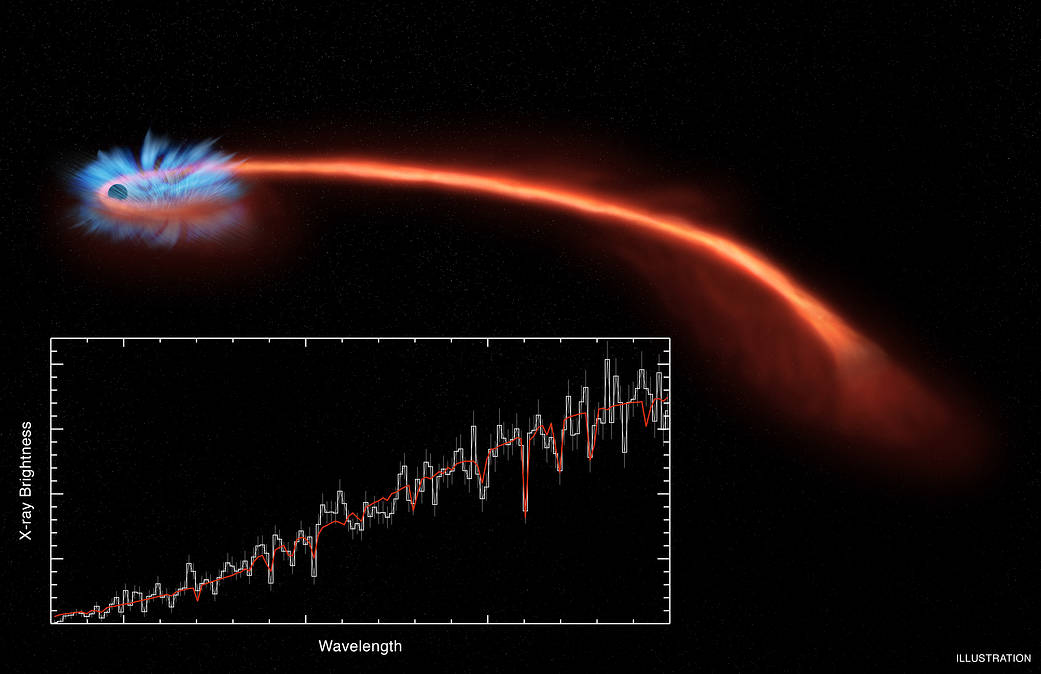
If a star passes close to a black hole, it can get ripped apart into a stream of plasma. This stream can wrap around the black hole and crash into itself, generating bright light that we can detect with telescopes. This is known as a “tidal disruption event”, and the light it generates can be used to study the mass and spin of the disrupting black hole. Our group models these events in order to reveal and study the disrupting black hole, which usually resides beyond our galaxy, and would otherwise be invisible to us.
Hydrodynamical Simulations
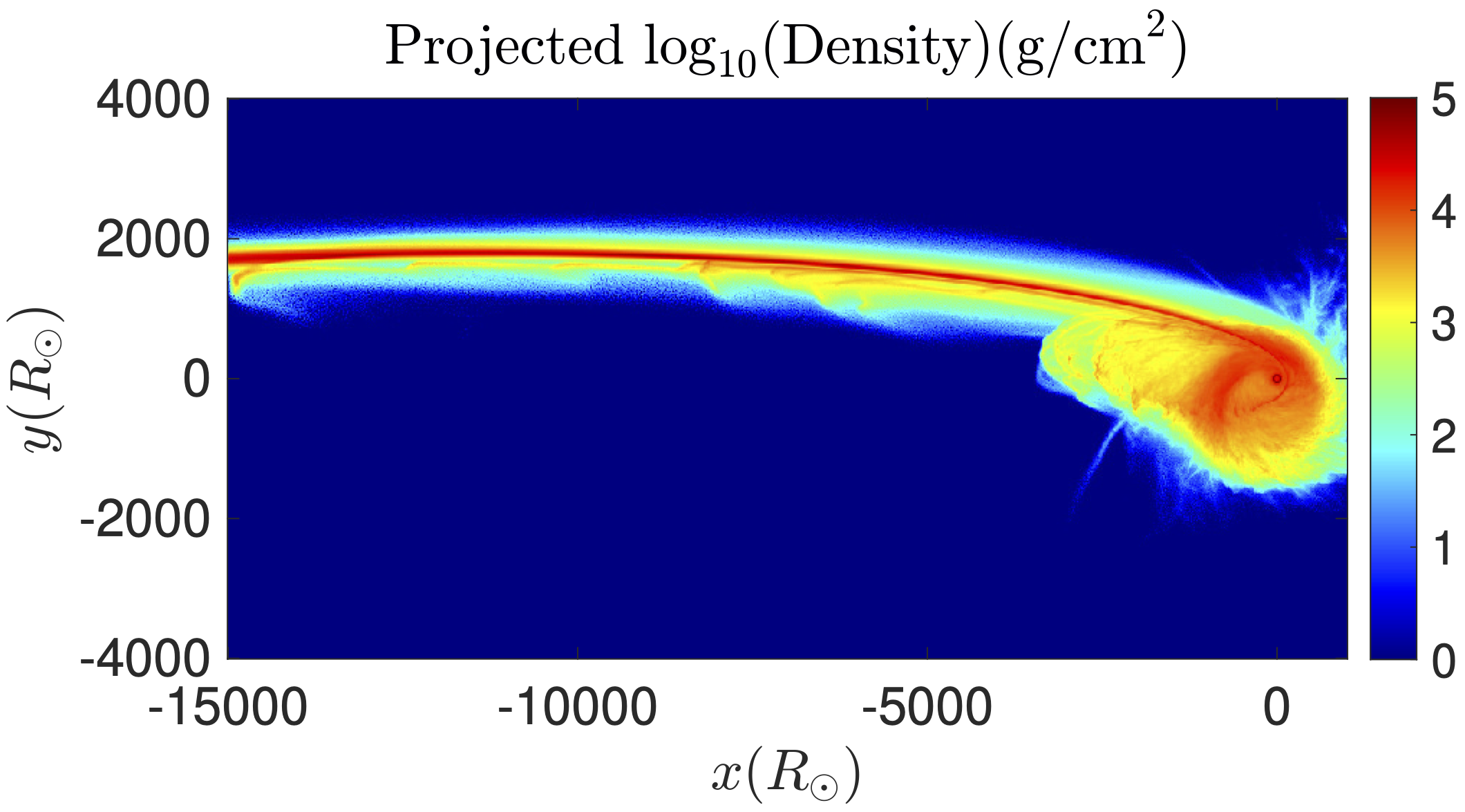
We use state-of-the-art moving-mesh radiation hydrodynamical simulation code RICH to study the full evolution of these tidal disruption events. Using supercomputers, we can deterministically predict what we would see in our telescopes, which can help us pin down the properties of the black hole in real observations in the future. The figure on the right shows what it looks like when a star like our sun falls into a massive black hole that is 1,000,000 times more massive than the sun.
Project Team

Elena M. Rossi
Professor
Principal Investigator

The artwork on this website was created by Benjamin Amend https://www.artstation.com/amendbj